Make Demolition Debris Disposal Less Stressful
Demolition projects in Owensboro can get messy fast. Once walls start coming down, piles of wood, metal, and broken concrete stack up on the driveway or job-site, and it can feel like the debris is winning. Cleanup often takes longer than the tear-out, especially when the trash is mixed together.
Demolition debris is not the same as regular household garbage. You are dealing with sharp edges, heavy loads, and different materials that all have their own rules. Landfills and transfer stations set limits on what they will accept, and some materials need special handling. If you toss everything into one heap, you can run into safety issues, delays, and even fines.
Good planning with the right dumpsters for demolition projects makes a huge difference. When you sort materials as you go and match each phase of the job with the right containers, cleanup is smoother and safer, and disposal is more likely to be accepted on the first trip. In this article, we will walk through how to sort wood, metal, and concrete, what can be recycled around Owensboro, and the key landfill rules that matter in Daviess County.
Know Your Demolition Debris Before You Start
Before the first hammer swing, it helps to know what you are tearing out. Most Owensboro remodels and tear-downs produce a mix of common building materials, such as:
- Framing lumber, trim, and cabinetry
- Roofing shingles and felt
- Siding, windows, and doors
- Drywall and plaster
- Concrete, bricks, and block
- Metal fixtures, rebar, and wiring
- Old flooring, carpet, and underlayment
Each of these materials behaves differently in a dumpster. Concrete and brick are very heavy, roofing stacks quickly, and drywall can fall apart and create dust. If you understand your debris mix early, you can plan container sizes and placement so crews are not fighting space all day.
Older homes and commercial buildings may have special materials that need extra care. Those can include:
- Lead-based paint on trim or siding
- Asbestos in old flooring, ceiling tiles, or insulation
- Treated lumber from decks or outdoor structures
These are not items to throw in with regular demolition debris. They often need special handling and should be addressed with trained professionals who understand local and state rules.
Taking time to identify debris ahead of time protects workers from hidden hazards and keeps neighbors happier by keeping dust and loose trash under control. It also helps you stay aligned with building and environmental rules in the Owensboro area. When you know what is coming, you can order dumpsters for demolition projects that match your actual needs instead of guessing.
Smart Sorting of Wood, Metal, and Concrete
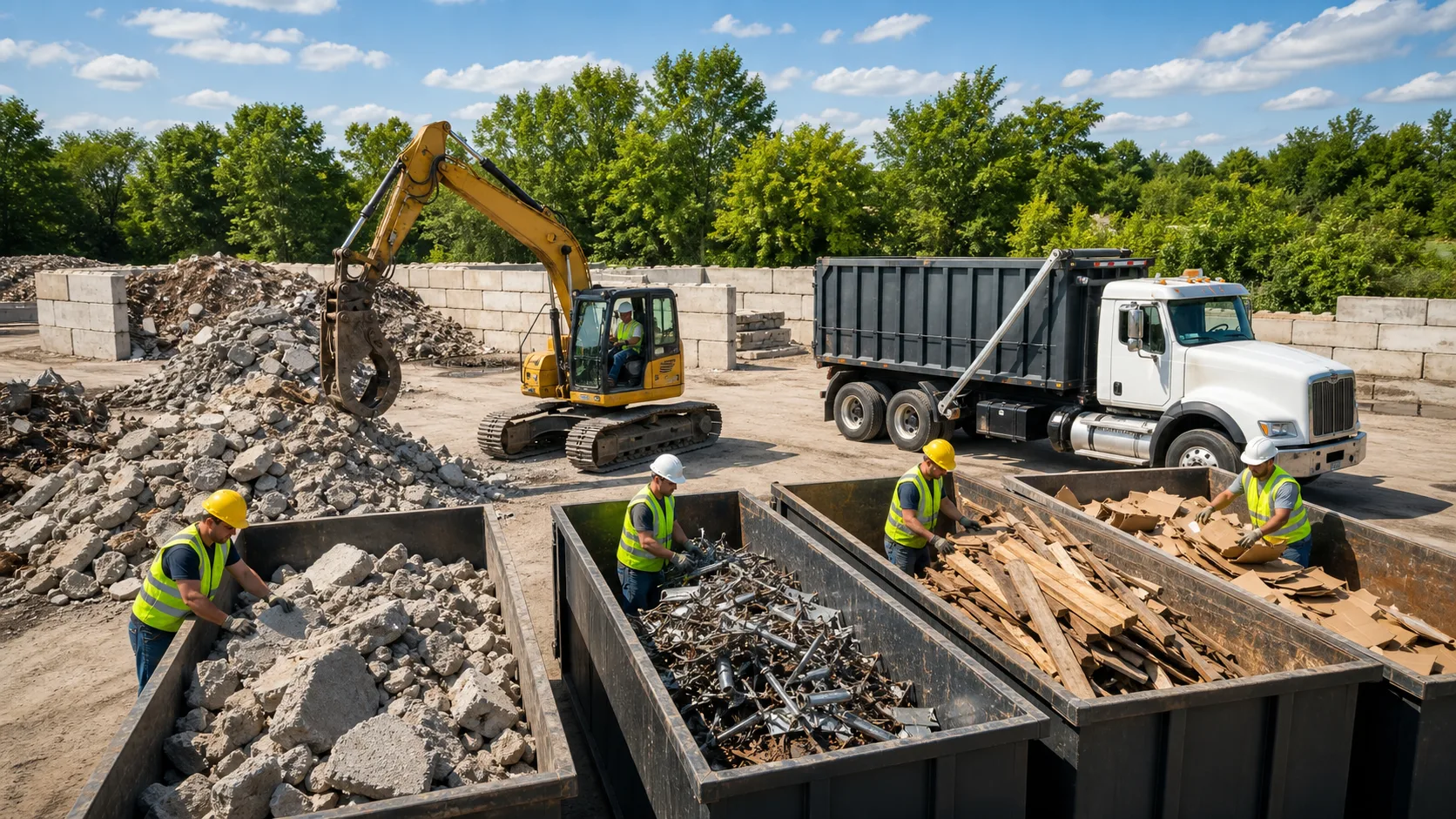
A simple sorting setup on site can prevent chaos later. You do not need anything fancy. You just need clear spots where crews know exactly what goes where. Many jobs work well with:
- One container or area for clean wood
- One for scrap metal
- One for concrete, brick, and masonry
- One for mixed waste that cannot be recycled
Clean wood means unpainted, untreated lumber or pallets. This type of wood can often be reused or recycled. Painted, stained, or pressure-treated wood belongs in a different stream because coatings and treatments change how it is handled. Keeping these separate from the start opens the door for better recycling options.
Metal is usually the easiest material to recycle, but only if it is not buried under drywall, trash bags, and broken tile. Pulling out copper, aluminum, and steel as they come off the building makes a difference. When you keep metals in a dedicated dumpster or pile, you cut down the volume going to the landfill and may create scrap value through recycling channels.
Concrete and brick need a little planning too. Best practices include:
- Breaking slabs and blocks into manageable pieces
- Keeping dirt, roots, and garbage out of the pile
- Keeping concrete, brick, and block together when possible
Clean, sorted masonry material is often a good candidate for crushing and reuse as fill or base material, instead of taking up limited landfill space.
Recycling Options That Cut Costs and Waste
Sorting on site sets you up for better recycling. Around Owensboro and the wider region, many common demolition materials have recycling options if they are kept reasonably clean.
Clean wood can often be turned into mulch, compost mix, or new wood products. Metals are regularly recycled and can be sold as scrap. Concrete and brick can be crushed and reused as aggregate, which lowers the need for new stone and reduces what you send to the landfill.
Having the right size dumpsters for demolition projects makes recycling easier. When containers are too small or there is only one shared space, crews are more likely to throw everything together just to keep working. With enough container space and a clear plan, sorting does not slow the job down.
There are also clear benefits for both your budget and the environment:
- Lower disposal fees for cleaner loads that are easier to recycle
- Potential scrap value for separated metals
- Less strain on Owensboro area landfills and transfer stations
- Fewer trips needed if loads are packed and sorted correctly
Before your project starts, it helps to talk with your waste provider about which materials can be diverted from the landfill and how they prefer debris to be loaded. On larger jobs, it may make sense to have separate roll-off containers for different materials to keep the flow steady and avoid contamination.
Key Landfill Rules Owensboro Contractors Must Know
Landfills and transfer stations that handle demolition debris have rules that affect what you can put in a dumpster. These rules are not just red tape; they help protect workers, equipment, and the environment. While the exact details can vary, most sites limit or ban items like:
- Hazardous materials and chemicals
- Liquids, oils, and some paints
- Tires and certain auto parts
- Appliances and electronics
- Large amounts of yard waste in mixed loads
Some normal building materials also come with special guidelines. Painted wood, insulation, roofing materials, and gypsum board can cause problems if they are heavily mixed with other debris or soaked with liquids. If loads are contaminated or contain banned items, they may cost more to dispose of or be rejected altogether.
Weight is another big factor for demolition jobs. Concrete, brick, and roofing are heavy, and it is easy to overload a container without realizing it. Local haulers usually set weight limits based on container size. If you go over, you may see overage charges or need extra trips.
Working with a local company that knows Owensboro and Daviess County rules makes planning easier. They can help you choose sizes, avoid overweight containers, and keep your debris within local disposal guidelines so your loads are accepted the first time.
Choose the Right Dumpster Partner for a Smooth Cleanup
Matching your container size to your project type is one of the most important planning steps. A small kitchen or bath remodel might need only a single roll-off dumpster, while a full house gut, roof tear-off, or commercial demolition will need larger or multiple containers. Thinking this through before demolition day keeps your crew moving instead of waiting for the next container to arrive.
A local provider that focuses on dumpsters for demolition projects can simplify every part of the process. With reliable delivery, scheduled swaps, and clear guidance on what can go into each dumpster, your team spends less time guessing and more time building. They can also help you set up a basic sorting plan, confirm recycling options for wood, metal, and concrete, and map out a pickup schedule that fits your fall and winter work.
When you plan ahead, demolition debris stops being a headache and becomes just another part of a well-run job site. A cleaner site is safer, easier to work on, and more likely to stay on schedule, from the first tear-out to the final sweep.
Get Started With Your Project Today
If your jobsite is about to get busy, we are ready to keep debris under control with reliable dumpsters for demolition projects sized to match your scope of work. At Local Waste Solutions, we help you schedule delivery and pickup around your timeline so crews can stay focused on the job. Reach out to our team with your project details and we will recommend the right setup. If you are ready to reserve a container or have questions, just contact us.