

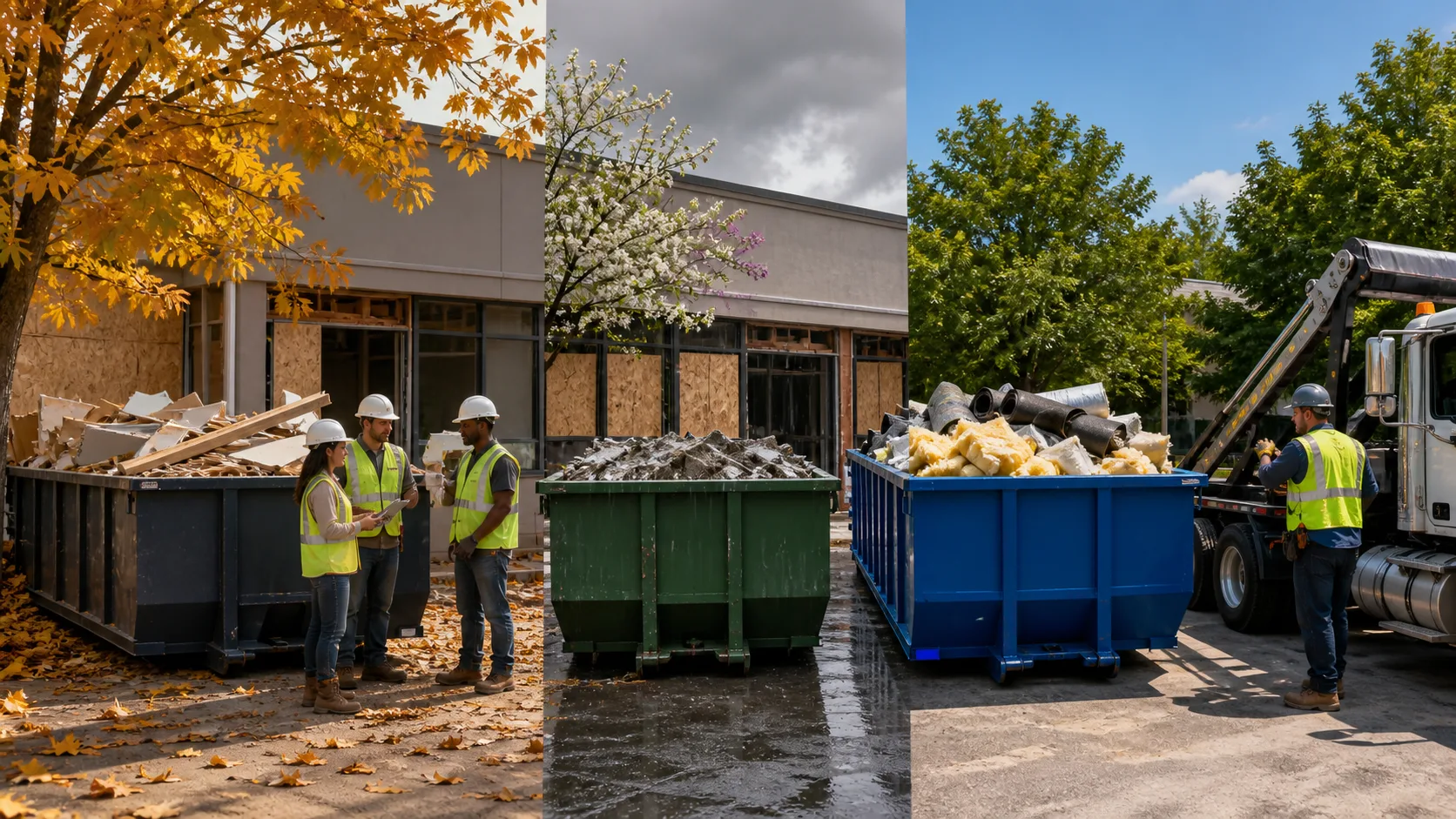
Plan Year-Round Construction Cleanups with Confidence
Construction debris in Owensboro does not look the same in spring, summer, fall, and winter. The weather shifts, the types of projects change, and the materials going into your roll-off dumpster rental change with them. If you build, remodel, or do your own demo, those seasonal changes can quietly affect both volume and weight.
Many contractors and homeowners plan based on how full a container looks, not how heavy it is. That is how good jobs end up with overloaded cans, surprise overage fees, and pickup delays. In this guide, we will walk through the most common waste types by season, the hidden weight risks, and smart dumpster sizing moves that help keep your schedule and budget on track.
In Owensboro, our weather runs from wet springs to hot summers to busy fall roofing work and freeze-and-thaw winters. At Local Waste Solutions, we see those patterns every day, so we build seasonal planning into how we talk about containers, weight limits, and service timing.
Spring Projects, Heavy Debris, and Muddy Weight Surprises
When the weather warms up, a lot of jobs kick off at once. In spring, contractors and homeowners commonly tackle roof repairs and partial replacements after winter, deck rebuilds and porch repairs, siding, fascia, and gutter replacement, and storm damage tear-outs along with early yard clearing.
The waste mix in spring often includes asphalt shingles and roofing felt, rotted wood, trim, and old metal gutters, broken branches, brush, sod, and topsoil, plus wet leaves and muddy yard waste.
The tricky part is moisture. Shingles, soil, and yard debris can soak up water, and mud clings to everything. Even if a 10- or 15-yard roll-off dumpster rental looks half full, the tonnage can be close to the limit.
A few spring tips for weight and sizing:
- Treat shingles, soil, and concrete pavers as heavy materials that hit weight limits fast
- Use a smaller dedicated container for dense debris and a larger one for lighter bulky waste
- Keep soil and rock loads low in the container instead of heaping them up high
Site conditions matter in spring too. Soft ground can rut and make it hard to roll a container away. Placing boards under the wheels, using the driveway when possible, and keeping access clear after rain all help with safe pickup.
Because every roof and yard is a little different, it helps to estimate spring loads based on shingle squares, roofing type, and rough yard waste volume. We often plan drop-off and pickup around local rain patterns so containers do not sit open through long storms.
Summer Remodels, Light Materials, and Overflow Risks
Summer is prime time for indoor and outdoor upgrades. Typical projects include:
- Kitchen and bathroom remodels
- Room additions and wall moves
- New windows and doors
- Full siding overhauls
- Garage cleanouts and outdoor living builds
The debris in summer skews lighter by weight but bulky by volume. It commonly includes drywall, framing lumber, and insulation; cabinets, countertops, and doors; vinyl siding and windows; and cardboard and packaging from new fixtures and appliances.
Here, volume is usually the bigger concern than weight. A 10-yard container can hit the top rail with drywall and cabinets long before it comes close to the tonnage limit. That is where overflow and extra hauls sneak in.
Smart sizing moves for summer:
- Think in rooms and square footage instead of just “one container should do it”
- For multi-room remodels, a 20- or 30-yard roll-off dumpster rental often beats several small cans
- Keep an eye on bulky items like cabinets and packaging that eat space fast
Heat brings its own planning issues. Loading earlier in the day can be safer for crews. It also helps to plan pickups so a nearly full dumpster is not sitting open over a long hot weekend, which can attract curious kids, animals, and unauthorized neighborhood dumping.
We like to match the scope of work, material list, and number of rooms to the right size so you are not calling for a rush swap halfway through demo.
Fall Demo, Roofing Season, and Dense Load Management
Fall in Owensboro is busy for roofing and last-chance projects before winter. Common jobs include:
- Full roof replacements
- Siding tear-offs and exterior repairs
- Major interior demo ahead of cold weather
- Garage, barn, and storage cleanouts
- Small commercial build-outs and renovations
Typical fall debris includes old shingles, felt, nails, flashing, and damaged decking; framing lumber, drywall, and interior trim; flooring like tile, laminate, and carpet; and seasonal clutter from property cleanouts.
Roofing tear-offs and tile flooring are some of the densest loads you can place in a container. Even a 10- or 15-yard can hit its weight limit quickly if it is filled only with shingles or tile. Add wet fall leaves, branches, and yard waste on top and the weight jumps even more.
To manage dense fall loads:
- Spread heavy materials evenly from front to back, not just in one corner
- Avoid stacking shingles too high in one area
- Do not mix large amounts of soil or concrete with household renovation debris
When does a smaller dedicated container make sense? Often for:
- Full shingle tear-offs
- Heavy tile or masonry removal
- Concrete and brick from small pads or steps
A larger 20-yard or more often works better when you are combining interior demo, light framing, plus packaging and household debris. Fall is a busy roofing season, so booking containers early and planning rotations around tear-off dates helps keep crews moving.
Winter Work, Weather Delays, and Frozen Debris Challenges
Winter does not shut jobs down; it just shifts them. Common winter work in our area includes interior remodels and room updates, basement finishes and build-outs, commercial maintenance and repairs, and emergency exterior fixes during milder stretches.
Winter debris usually looks like drywall, framing, and insulation; old fixtures, cabinetry, and doors; flooring and trim; and packaging, plus some snow- or ice-covered exterior scraps from emergency work.
Cold weather creates weight and safety issues that can surprise people. Snow and ice inside the dumpster add weight and can freeze debris into a solid block. Loads come out denser than they went in. Slippery ground and shorter daylight hours make safe loading and pickup planning more important.
Winter planning tips:
- Choose placement that stays as level and clear as possible, like a driveway
- Keep access paths shoveled and de-iced
- Consider tarping the dumpster to limit snow and water buildup
For most indoor winter remodels, a 15- or 20-yard container is a good middle ground. The focus often shifts from maximum volume to reliable timing, with steady pickups so a nearly full container is not sitting through a storm or long holiday break. Shorter rental windows can also help cut down on weather exposure and unauthorized dumping when sites are quiet.
Match Your Next Project to the Right Dumpster Size
Each season changes your debris mix. Spring brings heavy, wet shingles and muddy yard waste. Summer fills containers with bulky but lighter remodel materials. Fall stacks up dense roofing and interior demo, while winter adds snow and ice weight to mostly indoor debris. When you match your roll-off dumpster rental size and timing to those patterns, you avoid surprise fees and delays.
A simple way to plan your next job is to make a quick list before you order:
- Project type, such as roof replacement, kitchen remodel, or full cleanout
- Main materials, like shingles, drywall, soil, concrete, wood, or tile
- Rough square footage and number of rooms involved
- Target start and end dates, plus any seasonal weather concerns
With that information, our team at Local Waste Solutions can talk through weight limits, container sizes, and pickup timing that fit how work actually happens around Owensboro. We can also discuss options for multiple rotations on bigger projects and recycling opportunities where they make sense, so you can keep your site cleaner, your schedule tighter, and your debris handled the right way in every season.
Get Started With Your Project Today
Take the next step toward a cleaner, safer job site with our convenient roll-off dumpster rental options. At Local Waste Solutions, we help you choose the right size and schedule for your timeline so you only pay for what you need. If you have questions or need a custom quote, just contact us and we will walk you through every detail.